A leading manufacturer specializes in custom metal crafts and gifts
+86-13750321908

Jiangmen Jia Wei Gifts Co., Ltd.
 English
Views: 0 Author: Site Editor Publish Time: 2026-03-09 Origin: Site

Pick up a well-crafted Metal Keychain and you immediately notice the weight, the shine, and the fine details that make it feel more like a keepsake than a simple accessory. Behind that polished appearance lies a carefully managed production process that transforms raw metal into a durable promotional product. Understanding how a metal keychain is made helps buyers see why these items are often chosen for corporate branding, souvenirs, retail merchandise, and collector gifts. Each stage—from selecting the base metal to applying color and performing quality testing—contributes to the final look, durability, and overall value of the product.
At Jiangmen Jia Wei Gifts Co., Ltd., a manufacturer with nearly two decades of experience in custom metal crafts, the production of metal keychains combines skilled craftsmanship with modern equipment. Every step is designed to ensure that the finished piece is not only attractive but also strong enough to serve as a long-lasting brand reminder.
Keychains can be made from many materials such as plastic, leather, silicone, or wood. Each option has its place in promotional merchandise. However, metal keychains stand out because they combine durability with a premium appearance.
The solid weight of metal immediately gives a sense of quality. Unlike soft materials that may fade or deform over time, metal retains its structure and surface finish for years. This makes it especially suitable for items intended to represent a brand or commemorate an event.
Metal keychains are widely used in several applications:
Corporate giveaways for clients or partners
Tourist souvenirs sold in gift shops
Commemorative items for events or anniversaries
Retail accessories that complement lifestyle brands
Because metal can be molded, engraved, plated, and colored in many ways, it offers designers a wide creative range. Compared with PVC or leather designs, metal is often chosen when a project requires sharp detail, polished finishes, or a more prestigious look.
The production of a metal keychain begins with selecting the appropriate metal material. Different metals have different strengths, costs, and finishing possibilities, which directly influence the final design.
Zinc alloy is one of the most common materials used in custom metal keychains. It is particularly suitable for designs that require complex shapes or raised three-dimensional elements. The material flows well during the casting process, allowing manufacturers to reproduce fine details such as logos, textures, and patterns.
Because of this flexibility, zinc alloy is often used for souvenir keychains, character-shaped designs, and decorative promotional items.
Other metals are selected depending on the desired style and performance:
Brass offers a classic, slightly warm tone and is often used for vintage or antique-style finishes.
Iron is strong and cost-efficient, making it suitable for stamped flat keychains that require durability without complex shapes.
Stainless steel provides excellent resistance to corrosion and is frequently chosen for modern or minimalist designs.
Aluminum is lightweight and works well for anodized finishes in bright colors.
The choice of material affects several aspects of the product:
Weight and tactile feel
Surface finish compatibility
Production cost
Long-term durability
Selecting the correct metal ensures that the design concept can be produced efficiently while achieving the desired appearance.
Once the metal material is chosen, the next step is shaping it into the desired keychain form. Several manufacturing methods can be used depending on the complexity of the design.
Die-casting is widely used when a design includes depth, curves, or layered elements. In this process, molten metal is injected into a mold under high pressure. Once cooled, the metal solidifies into the exact shape of the mold cavity.
This method is ideal for logos with raised surfaces, character figures, or intricate decorative elements. The resulting piece has strong structural integrity and a clean surface ready for further finishing.
For simpler designs, metal sheets can be stamped using precision molds. This technique is particularly effective for flat or slightly embossed shapes such as badges, medallions, or classic round keychains.
Stamping allows for efficient production while maintaining consistent detail across large quantities. It is commonly used for corporate promotional items and commemorative tokens.
Modern manufacturing also uses CNC machining or laser cutting to produce sharp, precise outlines. This technique is often chosen for minimalist designs where the shape itself is the main visual feature.
Laser cutting ensures clean edges and accurate geometry, making it suitable for logos or symbols that require exact lines.
Each method offers different advantages, so the production team evaluates the design carefully before selecting the most appropriate process.
After the base shape is formed, the keychain enters the finishing stage. This stage determines how the product will look and how effectively it will represent a brand.
Metal plating is used to enhance appearance and protect the surface from corrosion. Common plating finishes include:
Shiny silver or nickel plating for a modern look
Gold plating for premium promotional items
Antique bronze or antique copper for vintage style
Black nickel for contemporary branding
These finishes create the base visual tone of the keychain.
Color and branding details are added using different decoration techniques.
Soft enamel fills recessed areas with vibrant colors while leaving raised metal lines visible. This method produces a textured appearance.
Hard enamel fills are polished flat with the metal surface, creating a smooth and refined look.
UV printing and epoxy coatings allow for full-color graphics and glossy protection.
Laser engraving permanently marks logos or text into the metal surface, ensuring durability even after years of use.
Layering these finishing techniques allows designers to create visually striking pieces that highlight brand identity.
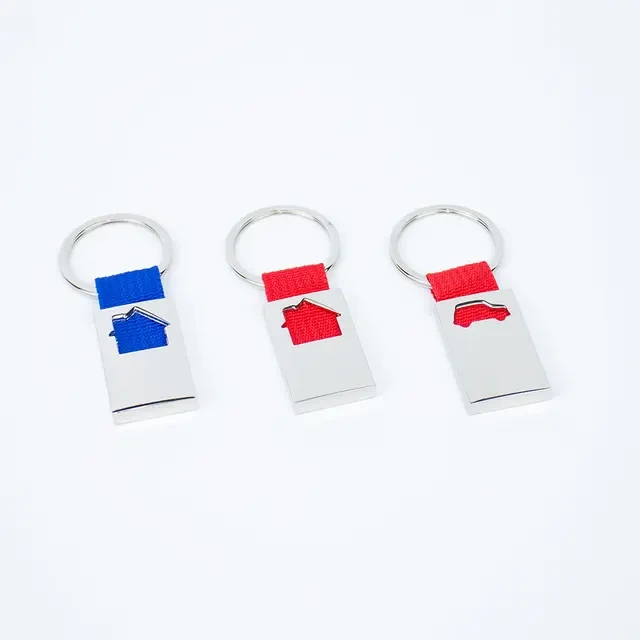
While the main body attracts the most attention, the hardware components play a critical role in usability.
Different hardware connectors serve different purposes. Split rings are the most common choice for everyday key storage. Lobster clasps provide a quick attachment system, often used in fashion accessories. Carabiner hooks add extra convenience for bags or belts.
Choosing the correct connector affects how people interact with the product. A sturdy split ring ensures keys remain secure, while a detachable clasp may be better suited for travel or outdoor use.
These small components must also match the style and plating of the main body so that the finished piece appears consistent and professionally designed.
Before a metal keychain leaves the factory, it must pass several quality checks to ensure reliability.
Plating thickness is measured to confirm that the finish will resist wear and corrosion.
Adhesion tests verify that enamel colors and coatings remain firmly attached to the surface.
Drop tests and wear tests simulate daily handling to ensure the keychain can withstand repeated use.
Color inspection checks that enamel or printed designs match the approved sample.
Salt spray testing evaluates corrosion resistance, especially for products intended for outdoor use.
These procedures help maintain consistent product quality and ensure that each order reflects the intended design standard.
Stage | Purpose | Main Options | Impact on Cost | Impact on Appearance |
Material Selection | Determine strength and weight | Zinc alloy, brass, iron, stainless steel | Medium | Influences durability |
Forming Method | Shape the main body | Die-casting, stamping, laser cutting | Medium to high | Defines structure and detail |
Surface Plating | Create protective finish | Nickel, gold, antique bronze, black nickel | Low to medium | Determines visual tone |
Decoration | Add color or branding | Enamel, engraving, UV print | Medium | Highlights logos |
Hardware Assembly | Enable everyday use | Split rings, clasps, carabiners | Low | Improves usability |
Quality Testing | Ensure durability | Adhesion, drop test, corrosion test | Low | Ensures long-term performance |
This overview shows that producing a metal keychain is not a single operation but a series of coordinated steps that work together to create a durable promotional item.
Metal keychains continue to be popular in marketing campaigns because they combine visual appeal with everyday practicality.
Companies often use them as premium giveaways for partners or clients. The weight and finish give the product a more valuable feel compared with simple plastic items.
Tourist destinations frequently sell metal keychains as souvenirs because they can capture iconic shapes such as landmarks, symbols, or cultural elements.
Collectors appreciate metal designs because they preserve fine detail and resist wear, allowing the item to remain attractive over time.
Retail brands also use metal keychains as accessories that complement their product lines, helping extend brand identity beyond clothing or lifestyle items.
Because keychains are carried daily, they repeatedly expose the brand logo to both the user and others around them. This constant visibility makes them an effective long-term promotional tool.
The process behind a custom metal keychain involves far more than shaping a piece of metal. Material selection, forming techniques, plating, decoration, hardware assembly, and rigorous testing all contribute to the finished product. Each decision influences durability, appearance, and overall brand impact. At Jiangmen Jia Wei Gifts Co., Ltd., experienced technicians and modern equipment work together to transform design concepts into long-lasting promotional accessories. Businesses seeking memorable merchandise often turn to a well-crafted metal key ring because it combines practicality with a premium look that continues to represent their brand long after it is first received.
If you are planning a custom project or exploring ideas for branded merchandise, feel free to contact us to learn more about our metal craft capabilities and design solutions.
1. What materials are most commonly used for a Metal Keychain?
Zinc alloy is widely used because it allows detailed shapes and strong durability. Other materials such as brass, iron, stainless steel, and aluminum are also used depending on the design and finish required.
2. Why are metal keychains often chosen for promotional gifts?
Metal keychains feel more durable and premium than many other materials. Their weight, polished finish, and detailed engraving help brands create a lasting impression.
3. How long does a custom metal keychain last?
With proper plating and finishing, a metal keychain can remain attractive for many years. The durability of metal helps it resist bending, fading, and surface damage during daily use.
4. Can logos or colors be added to a metal keychain design?
Yes. Techniques such as enamel filling, laser engraving, UV printing, and epoxy coating allow logos, text, and colors to be integrated into the design while maintaining long-term durability.


