A leading manufacturer specializes in custom metal crafts and gifts
+86-13750321908

Jiangmen Jia Wei Gifts Co., Ltd.
 English
Views: 0 Author: Site Editor Publish Time: 2026-06-12 Origin: Site

Modern marketing demands more than simple brand awareness. It requires predictable, measurable action. Historically, companies relied heavily on cheap trade show giveaways. These items often missed the mark. They ended up discarded, wasting budgets and diluting brand equity. Today, revenue teams face a highly competitive landscape. You need targeted tools to break purchase hesitation. You must lower acquisition costs and accelerate deal velocity. The psychological principle of reciprocity makes gifting an ideal behavioral catalyst. However, scaling this strategy introduces distinct logistical hurdles. Inventory management, fulfillment, and digital integration require careful planning. This guide explores how to deploy performance-driven gifting effectively. We will examine strategic funnel applications and review evaluation criteria for different reward types. You will learn practical implementation frameworks to protect your budget and boost conversion rates. Let us dive into the modern applications of marketing incentives.
Conversion Catalysts: Promotion gifts are primarily used to break purchase hesitation, accelerate deal velocity, and incentivize desired actions (e.g., referrals, software demos).
Lifecycle Placement: High-performing campaigns map different gift tiers to specific funnel stages—using low-cost digital incentives for lead generation and premium items or high-value gift cards for customer retention.
Format Selection Matrix: The decision between physical merchandise and digital rewards hinges on fulfillment capabilities, target audience preferences, and cross-border scalability.
Operational Risk: Successful implementation requires solving for reward trackability, data privacy, and tax compliance (e.g., W-9 requirements for high-volume digital payouts).
Marketing and revenue teams must move beyond vanity metrics. Simply tracking impressions rarely pays the bills. To drive tangible growth, organizations deploy Promotion Gifts to solve specific bottlenecks in the commercial funnel. Proper alignment between the incentive and the buyer’s current stage ensures maximum return on investment.
Consider how different funnel stages require unique psychological triggers. Early-stage prospects need a gentle nudge. Late-stage buyers often require a significant value demonstration. We can break these strategic placements down into four distinct categories.
Lead Generation & Top-of-Funnel Opt-ins: Capturing initial interest is notoriously difficult. Buyers guard their email addresses fiercely. You can use low-cost incentives as direct-response hooks. Offering a five-dollar coffee card significantly increases conversion rates on webinar registrations. The same logic applies to email newsletter signups and high-value content downloads. The small upfront cost easily justifies the influx of qualified leads.
Deal Acceleration (B2B): Enterprise sales cycles often drag on for months. Executive prospects ignore standard email cadences. Targeted gifting cuts through this inbox clutter. Sending a premium physical item secures meetings much faster. When you pair direct mail touchpoints alongside digital follow-ups, response rates skyrocket. You force the prospect to acknowledge the outreach.
Referral & Word-of-Mouth Engine: Traditional advertising channels keep getting more expensive. Customer referral programs offer a highly lucrative alternative. Gifting acts as the core economic engine here. You incentivize existing users to acquire net-new customers. Rewarding a successful referral costs a fraction of standard ad spend. It transforms passive users into active brand advocates.
Retention & Churn Mitigation: Customer loyalty prevents revenue leakage. Competitors constantly try to poach your best accounts. You can deploy unexpected milestone rewards to solidify loyalty. Sending a premium gift on a customer's one-year anniversary blocks competitor advances. These "thank you" touchpoints remind users why they chose your brand initially.
Mastering these four stages creates a seamless pipeline. Prospects enter the funnel willingly, move through the sales cycle rapidly, and advocate for your brand post-purchase.
Retailers, direct-to-consumer (DTC) brands, and subscription software models share a common challenge. They need to drive volume without destroying brand prestige. The Gift-with-Purchase (GWP) model solves this problem elegantly. It represents a highly specific application of promotion incentives designed to manipulate cart economics. You increase perceived value without discounting the core product.
Discounting trains customers to wait for sales. It damages your premium positioning. GWP campaigns offer a smarter alternative. They protect your profit margins while still delivering an exciting shopper experience. Let us explore four ways to execute this model effectively.
Average Order Value (AOV) Expansion: You set a minimum spend threshold to unlock the reward. If your average cart size is forty dollars, offer an exclusive item for orders over seventy-five dollars. This mathematically forces the customer to add more items to their cart. The perceived value of the free item heavily outweighs the extra spend in the buyer's mind.
Inventory Rotation & Liquidation: Every product business faces slow-moving stock. Do not rely on steep clearance sales. Instead, bundle these short-shelf-life products as exclusive gifts. Pair them alongside your best-sellers. This clears warehouse space quickly. It protects your brand equity from the stigma of heavy discounting.
Subscription Upselling: Subscription businesses thrive on recurring revenue. Getting a user to upgrade from a one-time purchase requires friction removal. Offer a premium physical or digital item exclusively to upgrading users. You effectively trade a small upfront margin for massive long-term customer value. The incentive breaks their commitment hesitation immediately.
Optimizing the Unboxing Experience: The campaign does not end at checkout. Delivery day presents a critical branding opportunity. Use branded packaging and premium materials. The inclusion should feel like a genuine value-add. If packaged poorly, it feels like an obligatory corporate handout. Beautiful unboxing experiences often trigger user-generated content on social media.
Rushing a GWP campaign often leads to poor unit economics. Always calculate your exact margins before launching. Ensure the promotional item complements the main purchase logically. Selling high-end espresso machines? Give away premium ceramic tasting cups. The logical pairing reinforces product usage.
Choosing the right medium dictates your campaign's success. Marketing teams must balance perceived customer value against internal operational capacity. A stunning item means nothing if your team cannot ship it reliably. Conversely, an instant digital code might feel too impersonal for a major VIP client.
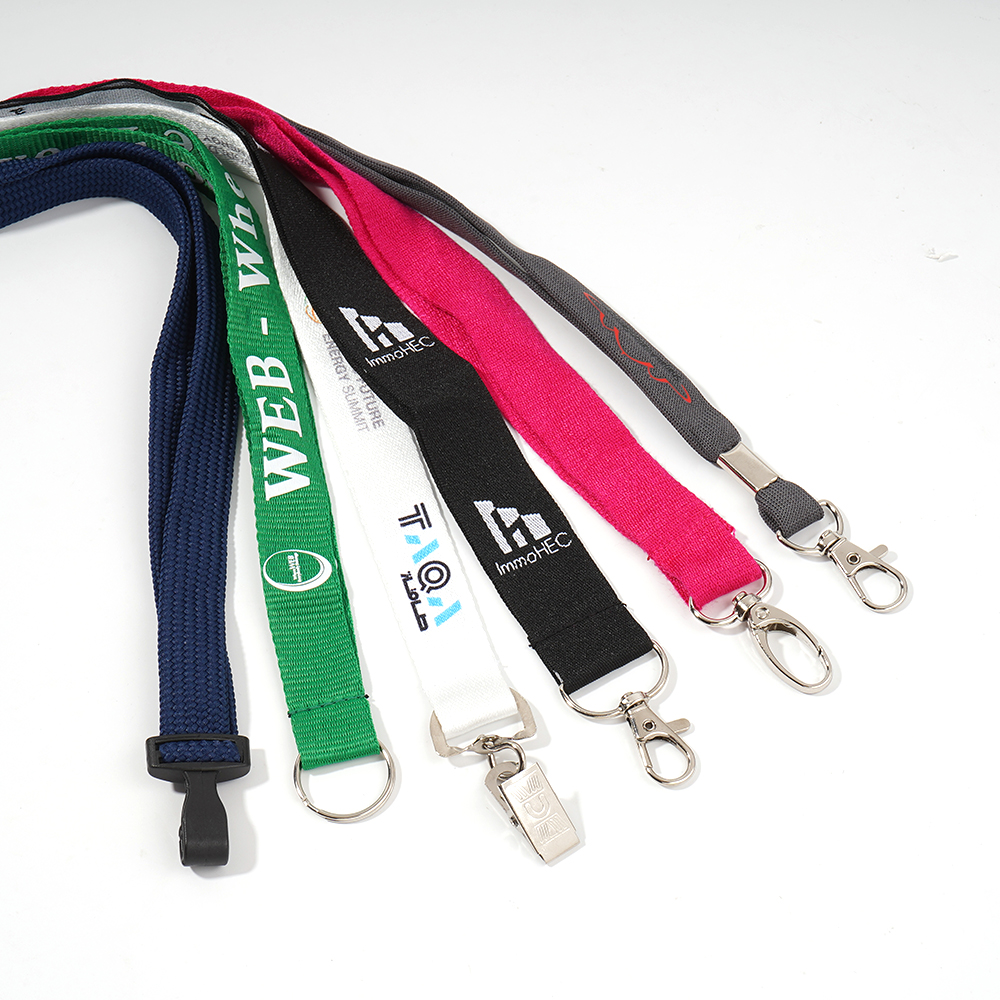
Physical merchandise offers unique advantages. We refer to this as "swag." High-quality drinkware, premium apparel, or custom tech accessories boast high longevity. A well-designed item can stay on a customer’s desk for years. This creates recurring brand recall. Every time they sip coffee, they see your logo. However, physical items carry immense operational overhead. They require warehousing space and significant upfront capital. You must manage manual shipping logistics and navigate complex global customs. Choosing cheap items backfires terribly. Irrelevant physical objects end up in landfills. This creates negative brand associations.
Digital rewards and prepaid cards offer a vastly different approach. They provide instant gratification. Customers receive their payout seconds after completing a desired action. You face zero shipping costs. The model features infinite scalability. Whether you reward ten people or ten thousand, the effort remains identical. Digital gift cards or prepaid Visa options allow recipients to choose their own reward. This flexibility yields much higher engagement rates. Yet, digital formats lack tactile permanence. They do not sit on a desk. If you fail to include personalized messaging, the interaction feels highly transactional and cold.
To simplify this decision, we can compare the two formats across key operational dimensions.
Evaluation Criteria | Physical Merchandise (Swag) | Digital Rewards & Prepaid Cards |
|---|---|---|
Fulfillment Speed | Slow to medium (days or weeks) | Instant (delivered via email or SMS) |
Scalability | Limited by inventory and warehouse capacity | Infinite and automated |
Brand Longevity | High (item remains in physical environment) | Low (value is spent and forgotten quickly) |
Operational Overhead | High (shipping, customs, storage fees) | Low (basic platform or API fees) |
Geographic Reach | Complex (international shipping barriers) | Simple (global digital currency options) |
Use physical items for deep relationship building. Account-based marketing thrives on personalized tactile experiences. Default to digital solutions for high-volume demand generation. Automated digital delivery keeps your acquisition costs predictable and manageable.
A brilliant marketing concept often fails during execution. Gifting campaigns must survive the transition into a rigid operational workflow. Failure to plan for backend realities inflates budgets rapidly. It also creates poor user experiences. Protect your brand by addressing three critical risk factors before launching.
First, you must eliminate redemption friction. The process of claiming the reward must take less than a minute. Do not force users through complex portal logins. Avoid making them fill out endless qualification forms. Extended wait times severely damage the intended goodwill. If a customer earns a reward, deliver it seamlessly. High friction leads to support tickets, frustrating both your team and the user.
Second, prioritize tracking and attribution. Never treat these campaigns as a sunk cost. You must integrate your delivery systems directly into your CRM. You can use native APIs or marketing automation platforms for this. Track redemption rates strictly against actual sales generated. Did the prospect who accepted the fifty-dollar coffee card actually sign a contract? This data allows for accurate A/B testing. You can test different reward values to find the mathematical sweet spot. If a twenty-dollar incentive converts just as well as a fifty-dollar one, you optimize your budget instantly.
Third, understand tax and compliance considerations. This factor proves especially relevant in B2B markets and high-volume referral programs. Many jurisdictions treat large cumulative incentives as taxable income. Marketing teams must ensure their platform handles necessary tax reporting. For instance, generating automated 1099 forms for recipients exceeding legal earning thresholds remains crucial. Failing to collect W-9 forms properly can trigger severe audit penalties. Choose software vendors equipped to automate these compliance workflows.
Many novice teams purchase inventory before defining the distribution strategy. They end up paying monthly storage fees for undistributed boxes. Another common error involves ignoring expiration dates on digital links. Always state clearly when a claim link expires. This creates urgency and prevents accounting liabilities years down the line.
Before buying thousands of branded hoodies or funding a massive digital wallet, hit pause. Establish a rigid evaluation framework. Haphazard launches destroy budgets. Systematic execution guarantees positive unit economics. Follow a distinct three-step process to validate your strategy.
Define the Metric: Pinpoint your exact optimization goal. Are you trying to lower customer acquisition costs? Are you aiming for higher average order values? Perhaps you need to reduce annual churn. A campaign designed to stop churn looks vastly different from one meant to capture new email addresses. Pick one primary metric and build around it.
Audit Internal Bandwidth: Be fiercely honest about your team's capacity. Does your marketing department have time to stuff envelopes? Do you have dedicated logistics personnel? If your team lacks this bandwidth, immediately rule out physical fulfillment. Default to automated digital solutions. Overburdening your staff leads to shipping errors and burnout.
Run a Pilot Program: Never launch to your entire database on day one. Start with a segmented cohort. Select the top ten percent of your existing customers for a referral push. Use a simple API to distribute the rewards automatically. Measure the baseline results carefully. Establish clear proof of concept before committing to a six-figure physical merchandise order. Pilots expose hidden friction points early.
Phase | Action Item | Success Indicator |
|---|---|---|
Phase 1: Planning | Define primary goal and target audience segment | Clear KPI alignment (e.g., Target CAC reduction of 15%) |
Phase 2: Auditing | Review logistics and select physical vs. digital medium | Selected medium matches internal team bandwidth |
Phase 3: Piloting | Launch to a small 10% test cohort | Statistically significant lift over control group |
Phase 4: Scaling | Automate CRM tracking and expand distribution | Maintained ROI metrics at larger volume |
By treating incentives as measurable performance levers, you transform an unpredictable expense into a reliable growth engine. Let the data dictate your expansion.
Deploying Promotion Gifts requires far more than picking items from a catalog. They are not discretionary brand-building expenses. They serve as highly tactical levers. You use them to manipulate unit economics, drive specific user behaviors, and solve distinct funnel friction. First, you must carefully select the right medium, balancing digital speed against physical permanence. Second, you need to match the reward value perfectly to the desired customer action. Avoid overpaying for low-intent leads. Finally, rigorously measure your returns through deep CRM integrations.
Your next steps involve auditing your current sales bottlenecks. Identify exactly where prospects stall or where customers churn. Design a small pilot program utilizing automated digital distribution. Establish your baseline metrics. By applying these disciplined frameworks, marketing teams can transform corporate gifting from a logistical headache into a highly scalable revenue channel.
A: ROI is measured by comparing the total cost of the campaign (cost of goods, shipping, software fees) against the specific conversion metric targeted. For lead gen, this is a reduction in Cost Per Lead (CPL); for GWP, it is the net increase in Average Order Value (AOV); for retention, it is the differential in churn rate between the gifted and non-gifted control groups.
A: It depends on the objective. Digital gifts (like prepaid cards) are superior for instant conversion incentives, global scalability, and automated referral payouts. Physical gifts are more effective for deep relationship building (e.g., B2B Account-Based Marketing) provided they are high-quality and personalized.
A: In many jurisdictions (such as the US), providing cumulative gifts or rewards over a certain dollar amount (e.g., $600 annually) requires tax reporting. Organizations running large-scale campaigns should utilize gifting platforms that automate compliance and W-9 collection.
A: Rather than heavily discounting older stock—which trains customers to wait for sales—brands can bundle stagnant inventory as a "free gift" when customers purchase new, full-priced items. This maintains the premium pricing of the core product while clearing warehouse space.