A leading manufacturer specializes in custom metal crafts and gifts
+86-13750321908

Jiangmen Jia Wei Gifts Co., Ltd.
 English
Views: 0 Author: Site Editor Publish Time: 2026-03-11 Origin: Site

A well-crafted Leather Keychain often raises a simple question from buyers and brand managers: if a keychain’s job is only to hold keys, why do so many companies and consumers still prefer leather? The answer lies far beyond basic function. Leather brings together practicality, tactile comfort, refined appearance, and long-term brand value. When a person carries a leather accessory every day, it gradually becomes part of their daily routine, making it far more memorable than a disposable promotional item. Understanding the true purpose of a leather keychain helps businesses recognize why this small object can become a meaningful branding tool, a thoughtful gift, and a durable everyday accessory.
At first glance, a keychain appears to be a simple object designed to organize keys. However, leather changes the experience of using this everyday item in several ways.
The first advantage is grip and usability. Leather naturally provides a soft yet secure surface that makes keys easier to hold and locate inside a pocket or bag. Unlike metal or plastic pieces that can feel cold or slippery, leather has a warm and slightly textured feel that improves handling.
Comfort is another factor. Leather accessories tend to be smoother and more flexible, which means they are less likely to scratch other items such as smartphones, wallets, or car interiors. This makes them particularly appealing for daily carry.
Beyond practicality, leather keychains create a polished appearance. Whether attached to a car key, office keys, or a bag zipper, the accessory becomes part of the owner’s personal style. Instead of looking like a promotional giveaway, a leather keychain feels like a thoughtfully designed product.
For this reason, many brands choose leather designs when they want their merchandise to appear refined rather than purely promotional.
Leather stands out because of its natural texture. Unlike synthetic materials that often have uniform surfaces, leather features subtle grain patterns and depth. These natural variations create visual richness that immediately signals quality.
The warm touch of leather also contributes to its premium perception. While metal can feel cold and plastic can feel artificial, leather offers a comfortable balance between softness and structure.
These tactile qualities are important because people interact with keychains many times each day. Every time someone picks up their keys, the texture reinforces the sense that the item is well made.
Another unique characteristic of leather is the way it evolves over time. As the material ages, it develops a patina that gives it a distinctive appearance. Slight changes in color and sheen create a sense of authenticity and individuality.
For brands and corporate gift programs, this aging process has a subtle marketing benefit. Instead of wearing out quickly, the product becomes more attractive as it is used. The longer it is carried, the more personal it feels.
This is one reason leather accessories are frequently selected for executive gifts, hospitality welcome kits, and premium promotional merchandise.
Different leather materials produce different visual and tactile outcomes. Choosing the right type is an important step when designing a custom keychain.
Full-grain leather is widely considered the highest-quality natural leather. It preserves the natural grain and offers exceptional durability. Products made with full-grain leather tend to develop the most distinctive patina over time.
Top-grain leather is slightly refined to create a smoother surface. It still retains much of the strength of natural leather while offering a more uniform appearance.
These materials are commonly used for luxury accessories, executive gifts, and branded merchandise intended to convey prestige.
Not all projects require natural leather. Synthetic alternatives such as PU leather or vegan leather provide flexibility in price and design.
These materials allow manufacturers to achieve consistent colors and textures while keeping production costs lower. They are often chosen for event giveaways, hospitality branding, or retail accessories where budget and consistency are important.
Each material option offers a different balance between cost, durability, and appearance. Selecting the right leather ensures that the final product matches the intended audience and marketing goals.
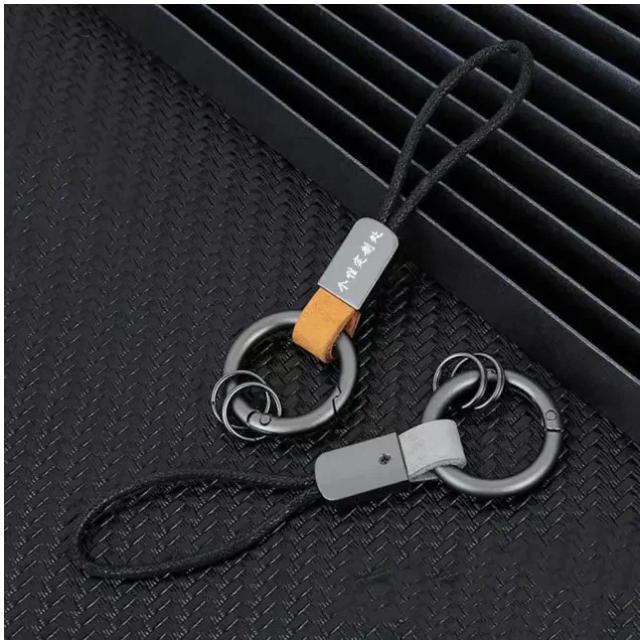
The design details applied to a leather keychain play a significant role in transforming it from a basic accessory into a recognizable brand item.
Embossing presses a design into the leather surface, creating a raised effect that highlights logos and patterns. Debossing does the opposite by pressing the design into the leather, producing a subtle and elegant impression.
Foil stamping introduces metallic accents, often in gold or silver tones, which can enhance luxury branding. Laser engraving allows precise detail while maintaining a clean and modern appearance.
Each of these techniques can be selected depending on the tone a brand wants to communicate.
Beyond surface decoration, structural details also influence the perception of quality.
Decorative stitching can outline the shape of the keychain and add visual contrast. Rivets strengthen the construction while providing a rugged aesthetic. Metal rings and clasps complete the design and ensure reliable daily use.
When these details are carefully combined, the final product communicates a cohesive identity. Subtle branding often appears more sophisticated than loud printing, making the accessory feel like a genuine product rather than a simple advertisement.
Leather accessories have long been associated with thoughtful and practical gifts. A leather keychain offers the advantage of being small enough to distribute widely while still feeling valuable.
Many companies choose leather designs for executive gift programs. Because leather conveys a sense of craftsmanship and durability, it aligns well with professional environments.
Hotels and travel companies often include leather keychains in welcome kits for guests. The accessory serves as a practical souvenir that travelers can continue using after their trip.
Boutique retailers and lifestyle brands also favor leather keychains because they complement products such as bags, wallets, and apparel. The accessory becomes part of a broader product ecosystem.
Collaborative merchandise projects between brands frequently use leather as well. The material provides a neutral yet elegant base for logos and design elements.
Compared with low-cost plastic items that may be discarded quickly, leather keychains are far more likely to be kept and used regularly.
Style or Material | Best Application | Branding Method | Visual Effect | Positioning |
Full-Grain Leather | Executive gifts | Embossing or debossing | Natural luxury look | Premium |
Top-Grain Leather | Corporate branding | Laser engraving | Clean professional finish | High-end |
PU Leather | Promotional events | Foil stamping | Bright consistent color | Mid-range |
Vegan Leather | Retail accessories | Screen printing | Modern eco-conscious image | Flexible |
Leather Strap Design | Travel accessories | Debossed logo | Minimalist style | Lifestyle |
This comparison highlights how different materials and design methods influence the overall perception of the product.
The finishing quality of a leather keychain has a direct impact on how it is perceived. Smooth edges, even stitching, and well-aligned hardware contribute to a refined appearance.
When edges are properly treated and sealed, the leather maintains its shape and resists fraying. High-quality stitching ensures the structure remains secure even with frequent use.
These details may seem small, but they strongly influence whether a product feels premium.
Metal components attached to leather keychains must also meet durability standards. Rings and clasps should resist scratching and maintain their finish over time.
Color stability is another important factor. Leather dyes and coatings should maintain consistent appearance even after extended handling.
Poor finishing or weak hardware can quickly reduce the perceived value of an otherwise attractive product. Attention to these details ensures the accessory maintains its professional look throughout its lifespan.
Every material has strengths, but leather is often preferred in certain situations.
Hospitality and executive gifting programs benefit from the refined appearance of leather accessories. The material naturally conveys a sense of professionalism and attention to detail.
Minimalist brands often select leather because it allows logos to be presented subtly. Debossed designs blend naturally with the material without overwhelming the visual identity.
Leather also provides a softer tactile experience than metal products. This makes it suitable for everyday carry where comfort matters.
For brands aiming to communicate understated luxury rather than bold promotion, leather becomes an ideal medium.
The true value of a leather keychain lies in the balance it creates between function and perception. While it still performs the simple task of holding keys, the material introduces comfort, durability, and a refined appearance that elevates the accessory beyond a basic tool. Through careful selection of leather types, thoughtful design details, and high-quality finishing, businesses can transform a small everyday item into a meaningful brand representation. Jiangmen Jia Wei Gifts Co., Ltd., with nearly two decades of manufacturing experience, produces customized leather accessories designed to combine practicality with premium style. For organizations looking to create memorable merchandise or thoughtful corporate gifts, a carefully crafted leather key fob offers both lasting usefulness and subtle brand visibility.
If you would like to explore custom designs or discuss your branding ideas, please contact us to learn more about our leather craft capabilities and product solutions.
1. Why is a Leather Keychain considered more premium than plastic or PVC options?
Leather offers natural texture, durability, and visual depth. These qualities create a more refined appearance and make the accessory feel more valuable compared with basic promotional materials.
2. What types of leather are commonly used for leather keychains?
Common options include full-grain leather, top-grain leather, PU leather, and vegan leather. Each material offers different advantages in terms of durability, appearance, and price.
3. Can logos be added to a Leather Keychain without damaging the material?
Yes. Techniques such as embossing, debossing, foil stamping, and laser engraving allow logos and brand elements to be integrated while maintaining the integrity of the leather surface.
4. Are leather keychains suitable for corporate promotional gifts?
Yes. Because leather accessories combine practicality with a professional look, they are widely used in executive gifts, hospitality welcome kits, and premium promotional campaigns.


